The RMH Group evaluated geo-exchange and deep geothermal energy solutions across the University of Colorado Boulder’s three primary campuses to support long-term decarbonization and energy resilience goals. The team analyzed each campus’s heating and cooling demands, available land area, and subsurface conditions to identify the most viable geothermal strategies.
At Williams Village, RMH determined that a conventional geo-exchange system could efficiently meet campus energy needs. For Main Campus, the team assessed a deep geothermal steam solution capable of supporting approximately 200,000 MBH of heating and 10,000 tons of cooling through a borefield of up to 2,600 wells reaching depths of 1,000 feet. At East Campus, RMH compared an ambient loop network with a centralized heat pump plant to serve approximately 100,000 MBH of heating and 8,000 tons of cooling, using up to 1,700 boreholes at a depth of 800 feet.
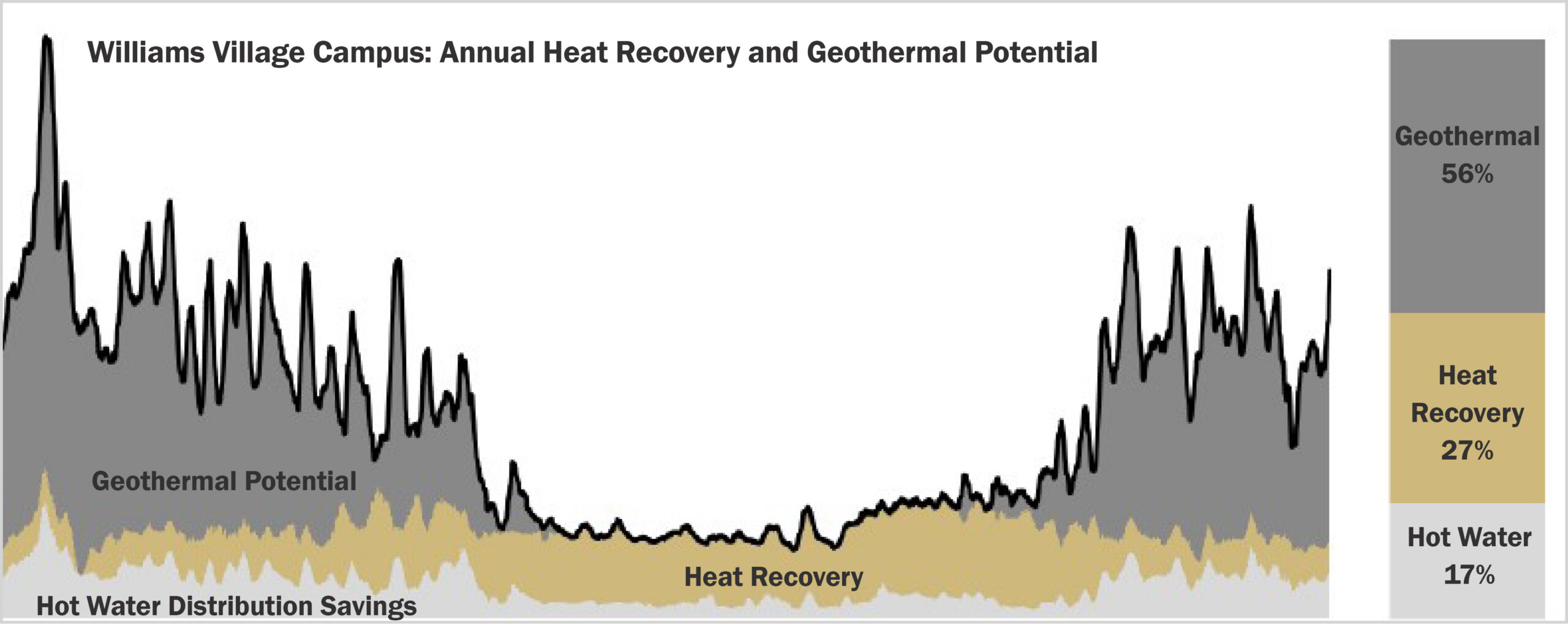
The study also identified a geo-exchange opportunity at Williams Village capable of supporting 17,000 MBH of heating and 750 tons of cooling with approximately 300 boreholes. In addition, the team evaluated a campus-wide alternative featuring a 26,000-foot closed-loop deep geothermal system capable of serving all three campuses.