
Byron G. Rogers Federal Building Modernization
CLIENT | OWNER:
U.S. General Services Administration
PROJECT LOCATION:
Denver, CO
KEY WORDS:
Award Winning, Chillers, Cooling Towers, Design Build, Generators, Historical Preservation, LEED-Gold Certified, New Boilers, Power Distribution, Renewable Energy, Report/Study
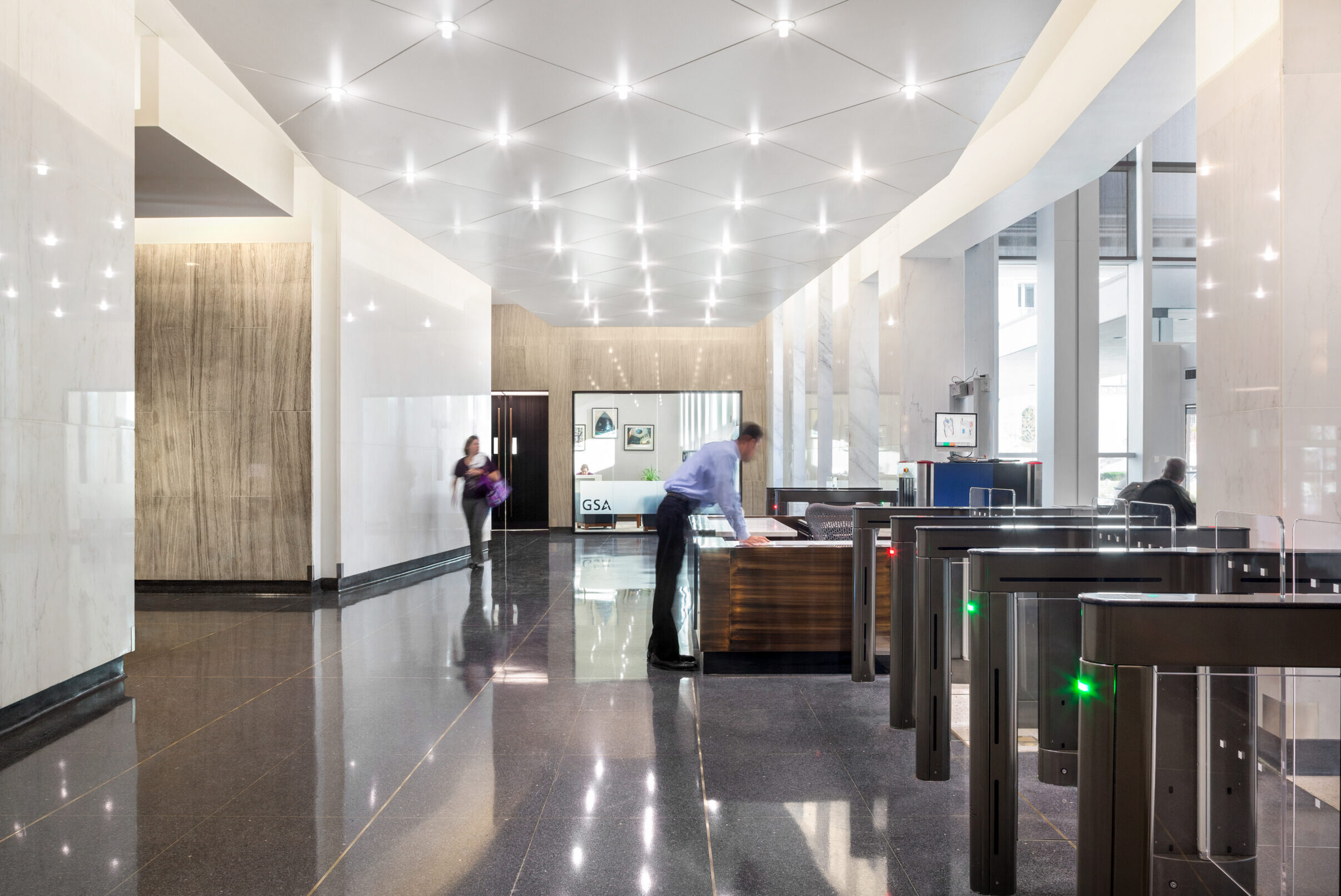
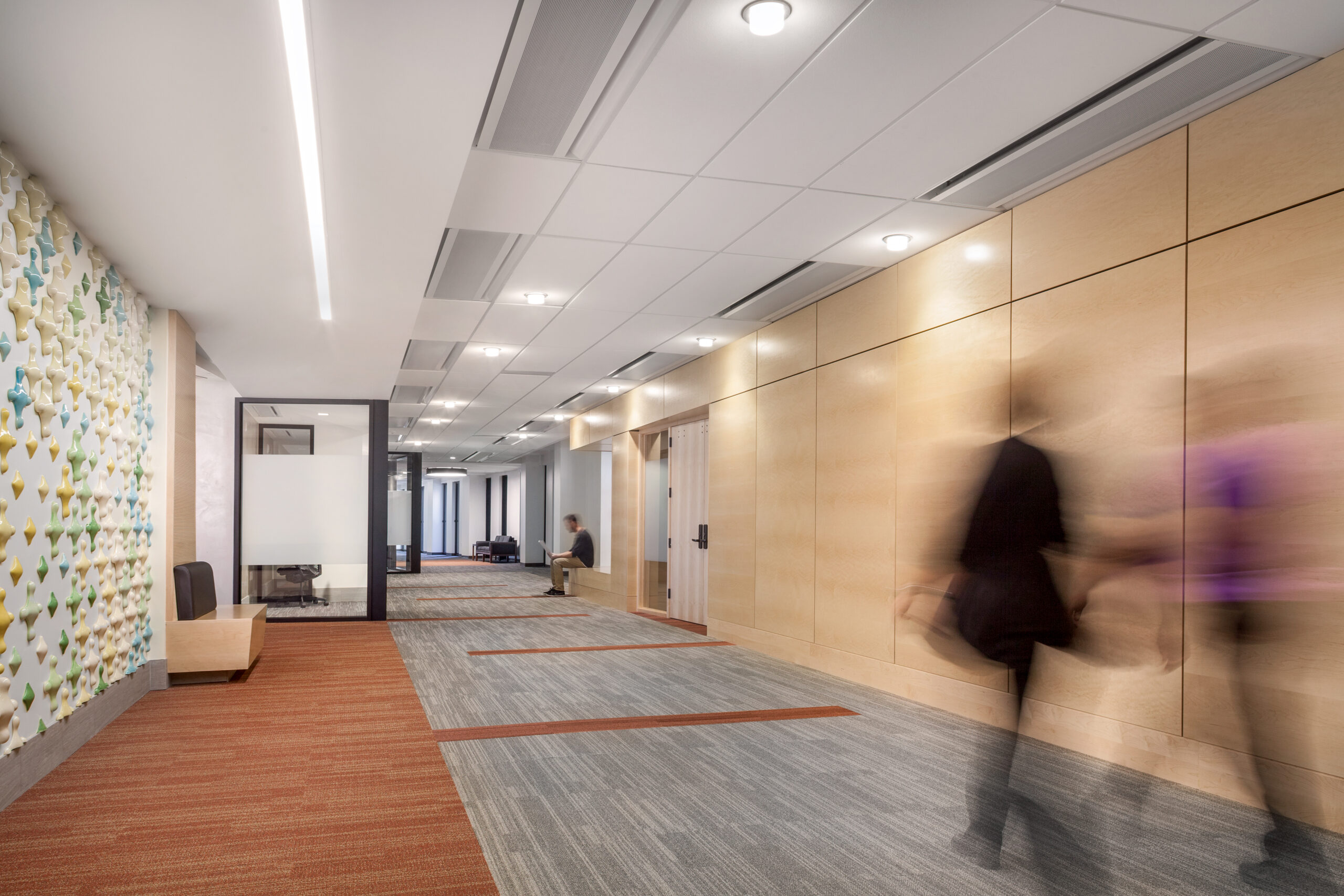
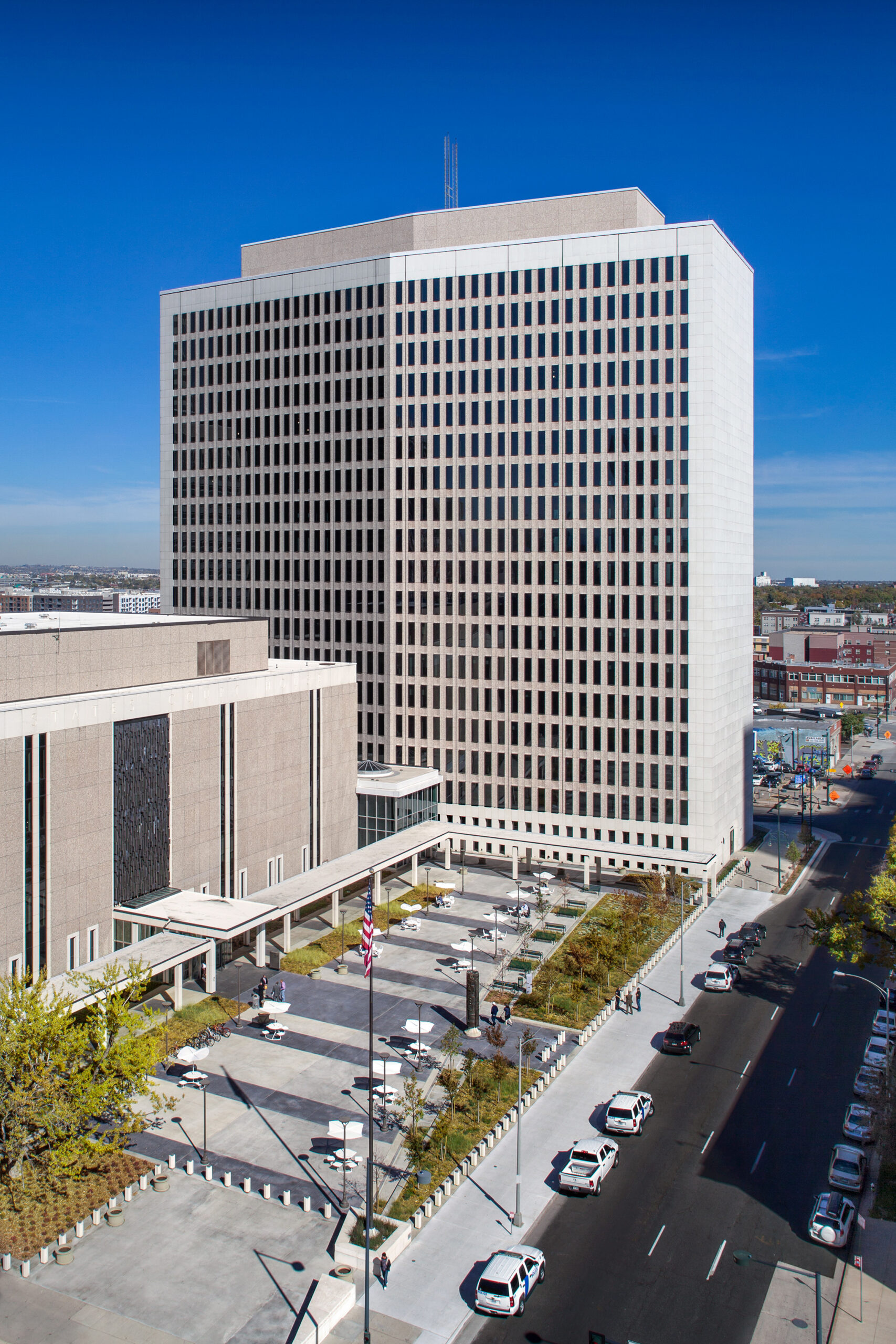
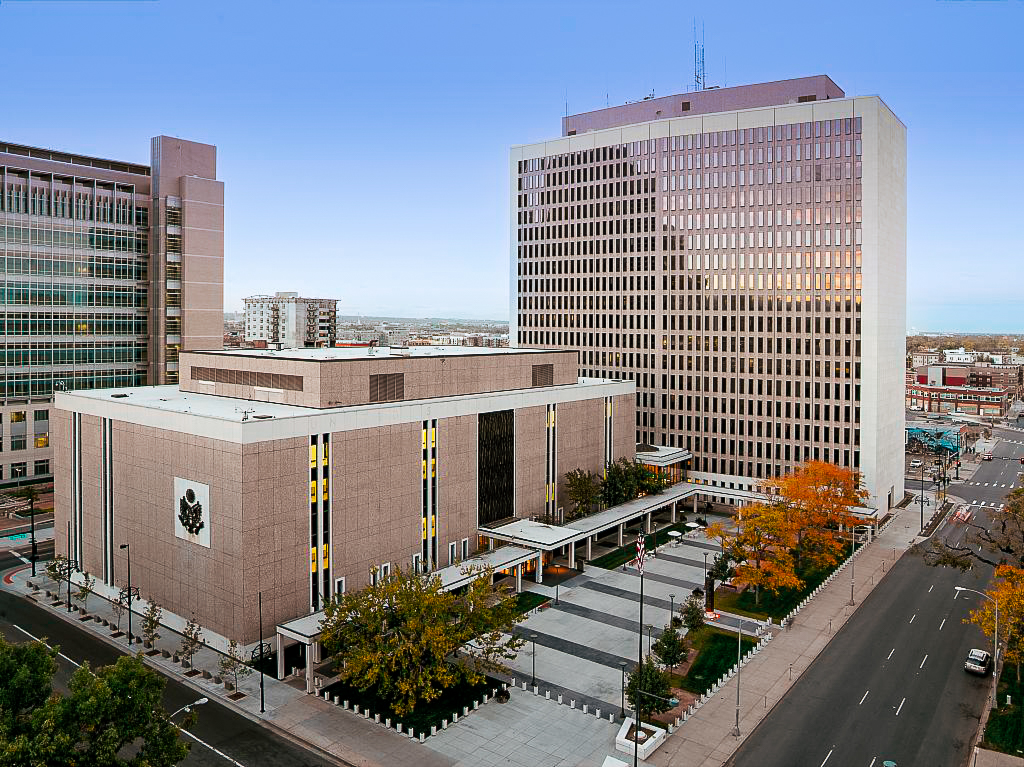
Home to 11 federal agencies, the Byron G. Rogers Federal Office Building in downtown Denver was targeted by its owner, the U.S. General Services Administration, for an extensive modernization project to significantly improve energy efficiency and deliver advanced updates to this important example of 1960s-era Federal architecture. This design-build project involved comprehensive upgrades to all major building systems housed within the 18-story, 494,000-square-foot office tower and minor improvements to the adjacent courthouse. The upgrades are projected to reduce energy use in the office tower by nearly 70 percent relative to current levels.
In addition to improving building envelope insulation, the most significant energy savings were achieved by implementing a chilled-beam system to replace the building’s inefficient, inflexible mechanical system. A chilled-beam system is an advanced method for distributing heating and cooling throughout the building with minimal energy waste. It primarily uses water at a moderate temperature to condition building spaces. After capturing heat generated by building occupants, computers, lighting, and solar gain, a thermal tank in the basement stores and circulates this heat through the building’s chilled-beam system as needed.
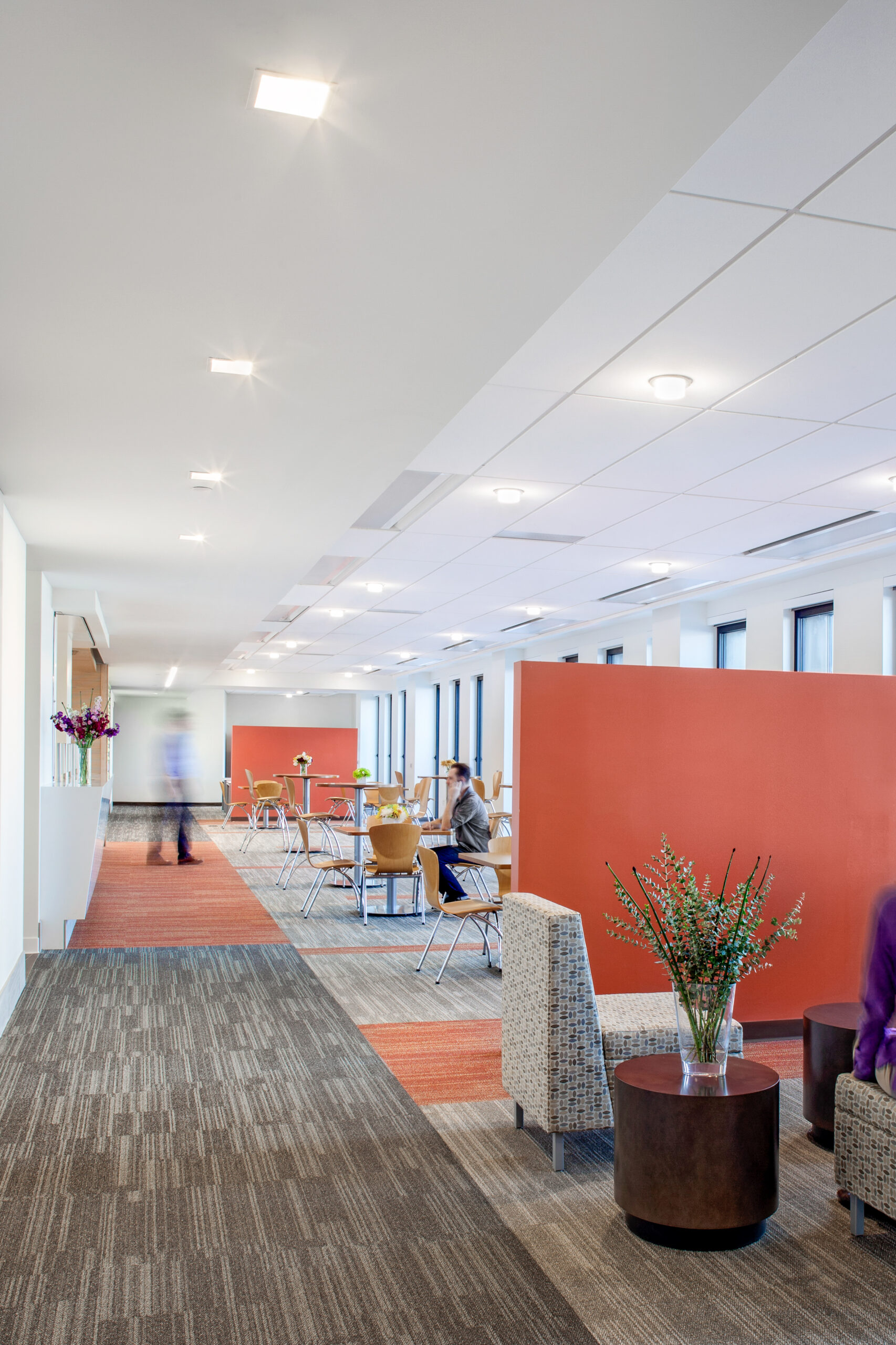
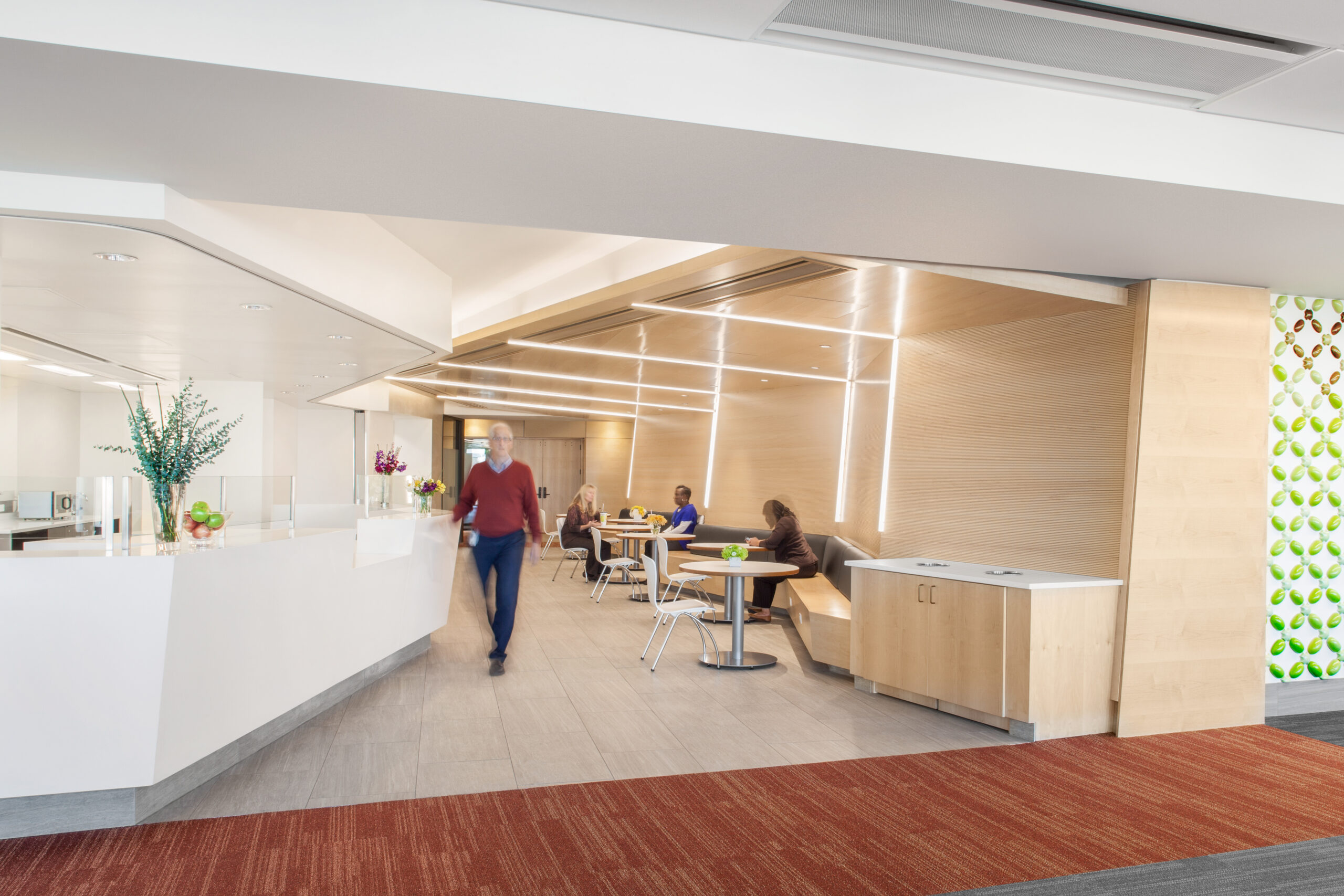
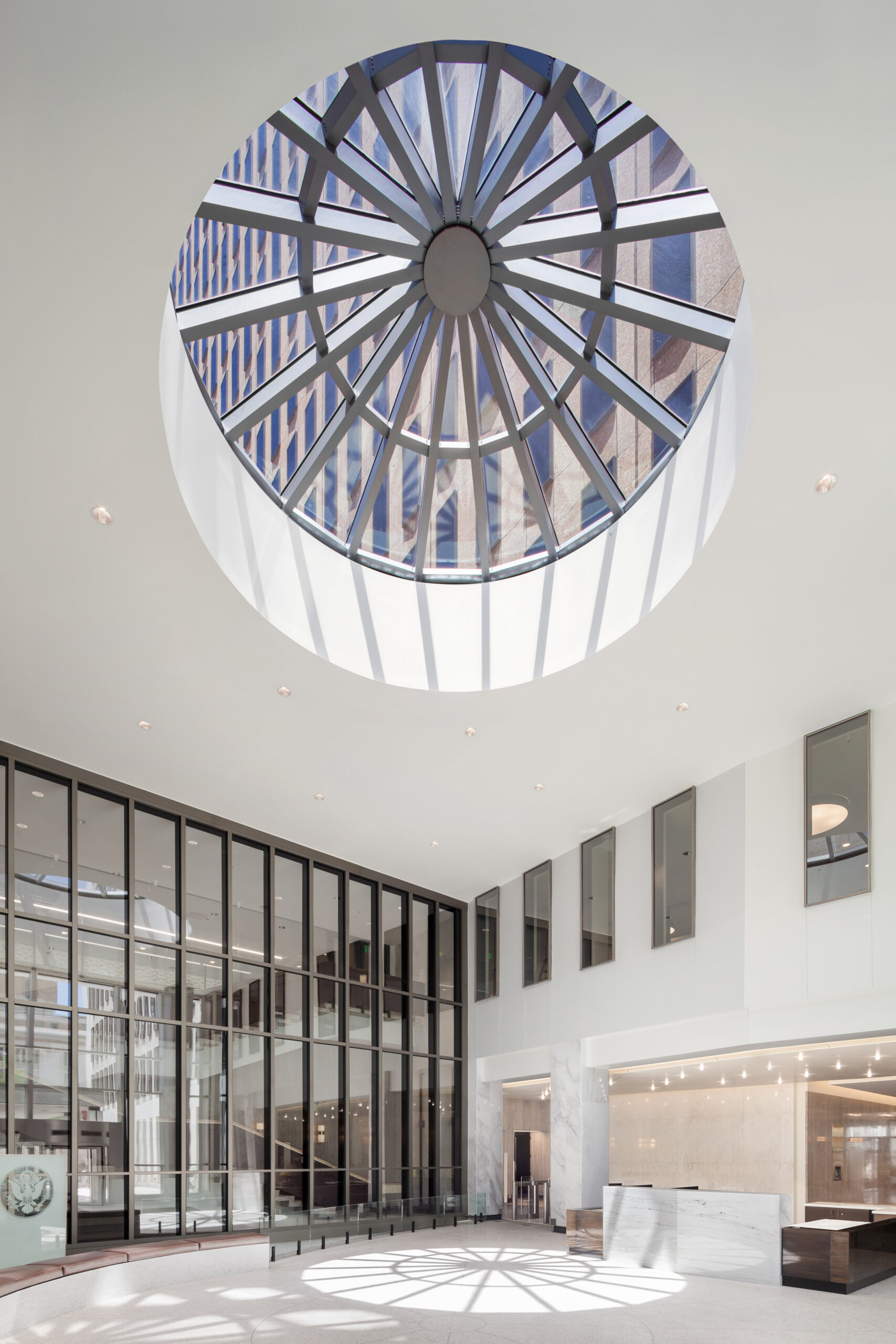
The retrofitted building features additional energy-saving technologies, including 100% LED lighting, enhanced daylighting, and roof-mounted solar thermal collectors that provide all of the building’s domestic hot water. Water-conserving strategies are expected to reduce water use by 40 percent. The comprehensive modernization positions this Federal facility as a model for sustainable government building operations while preserving its architectural significance.
As the project’s mechanical, electrical, and plumbing engineer, RMH provided comprehensive MEP engineering services for this transformative modernization project.